🌏 Why Sustainability Now Defines MICE Events in Indonesia
The pressure to decarbonise events is no longer peripheral. Indonesia's MICE sector — estimated to be worth billions of USD annually across conventions, incentive travel, exhibitions, and congresses — is facing a structural shift driven by three converging forces:
- Corporate ESG mandates: MNCs operating in Indonesia increasingly must disclose Scope 3 emissions, which include business travel and events. An annual summit that generates 150 tonnes of CO₂e is now a line item in ESG reports.
- Regulatory alignment: Indonesia's NDC commitment under the Paris Agreement targets a 29–41% reduction in greenhouse gas emissions by 2030. Government-aligned bodies like Kemenparekraf and INAMICE are actively promoting sustainable MICE practices at the national level.
- Delegate expectations: Research consistently shows that Gen Z and millennial professionals — who now form the majority of MICE attendees — actively consider sustainability credentials when evaluating conference experiences and employer brands.
A 2024 study of two major Jakarta MICE venues found green meeting implementation scores between 73–77%, with accessibility and waste management leading — but no dedicated sustainability teams yet in place. This gap represents a real opportunity for event organisers to lead the way by specifying sustainable production from the supplier side.
Telkom Indonesia's Digiland Run 2025 — one of Indonesia's highest-profile corporate events — tracked its full carbon footprint at 144,043 kg CO₂e across venue energy, transport, food & beverage, and waste. They partnered with Jejakin to measure and offset those emissions. This model is becoming the new standard for serious corporate events in Indonesia.
📋 ISO 20121 & Indonesia's Sustainable Event Standards
ISO 20121 is the international standard for Sustainable Event Management — a framework that covers the entire event lifecycle, from procurement and energy management to delegate welfare and waste reduction. It was originally developed for the 2012 London Olympics and has since been adopted globally.
How ISO 20121 Applies in Indonesia
INAMICE (Indonesia MICE Association) has positioned ISO 20121 adoption as a priority for Jakarta venues and suppliers, aligning the industry with the United Nations Sustainable Development Goals (SDG 2030). The initiative includes:
- Paperless production — digital programmes, e-registration, QR-code name badges
- "1 tree for 1 ticket" carbon contribution models
- Recycled or locally sourced merchandise and catering materials
- Waste stream separation at venue level
- Formal sustainability reporting after each event
The Four Core Pillars of ISO 20121 for MICE Events
Practical application: For international event planners, ISO 20121 provides a checklist and audit trail that satisfies ESG reporting requirements. Ask your Indonesian production vendor to confirm ISO 20121 awareness and to provide an energy load plan, which forms part of your environmental impact documentation.
📊 Understanding Your Event's Carbon Footprint in Indonesia
Before you can reduce or offset emissions, you need to understand where they come from. For a typical MICE event in Jakarta, carbon emissions cluster into four main categories:
| Emission Source | Typical % of Total | Primary Reduction Lever | Difficulty |
|---|---|---|---|
| 🚗 Attendee transport | 40–60% | Venue near transit hubs; shuttle buses | MEDIUM |
| ⚡ Energy (venue + equipment) | 20–35% | LED lighting; right-sized silent gensets; PLN grid | LOW |
| 🍽️ Food & beverage | 10–20% | Local sourcing; plant-forward menus; reduced waste | LOW |
| 🗑️ Waste (materials, packaging) | 5–15% | Digital signage; reusable staging; no single-use plastic | LOW |
Example: 300-pax Jakarta conference ≈ 15,000–50,000 kg CO₂e depending on attendee origin
The most actionable category for event producers is energy and equipment — because it's 100% within the production supplier's control. Right-sizing your power, switching to LED, and using fuel-efficient generators can cut the energy component of your event's footprint by 40–60%.
⚡ Energy-Efficient Production Equipment for MICE Events
The production equipment you choose has a direct and measurable impact on your event's energy consumption and carbon footprint. Here's a breakdown of the highest-impact choices available in Indonesia:

🔋 Silent Generators: The Eco-Conscious Power Solution
When grid power is unavailable or insufficient at outdoor venues — which is common for MICE events at resort properties, open-air venues, and non-convention venues across Indonesia — the generator is the primary energy source. The choice of generator has significant environmental and experience implications.
Silent Diesel Generator vs Conventional Open-Frame Generator
| Feature | Silent Canopy Genset | Open Frame Genset |
|---|---|---|
| Noise level at 7m | 60–75 dB QUIETER | 90–110 dB |
| Fuel efficiency | Higher — optimised load management BETTER | Lower — often over-specced |
| Suitable for gala dinner / MICE | ✅ Yes | ❌ Noise disrupts proceedings |
| Load management | Panel distribution available RECOMMENDED | Basic |
| Environmental compliance | Better — enclosed emissions | Open — direct exhaust |
| Available from Eventara | ✅ 10–500 KVA | — |
An over-specced generator running at 30% load is dramatically less fuel-efficient than one running at 70–80% load. Eventara Indonesia provides a pre-event energy load plan to ensure your generator capacity matches actual draw — reducing fuel consumption and emissions by 20–30%.
Genset Sizing Guide for Sustainable MICE Events
Important: Always multiply total equipment watt load × 1.5 safety factor, then round up to the nearest standard KVA unit. An operator on standby during the event is strongly recommended for MICE events — it prevents idle running and enables real-time fuel monitoring.
💡 LED vs Conventional Lighting: The Numbers for Event Planners
Lighting is typically one of the top three energy consumers at any MICE event. The shift from halogen and HID fixtures to LED is the single most straightforward energy reduction available to event producers in Indonesia — and Eventara's entire lighting inventory is LED-based.
Energy Comparison: LED vs Halogen for a 300-Pax Gala Dinner
Carbon impact: Using Indonesia's grid emission factor of approximately 0.87 kg CO₂/kWh, that 32 kWh saving per event equates to 27.8 kg CO₂e avoided per event — multiplied across a full conference day with multiple lighting zones, total savings can reach 200–500 kg CO₂e.
♻️ Waste Reduction & Digital Materials Strategy
Physical event materials — printed programmes, foam-board signage, banner stands, branded merchandise — represent a significant and largely avoidable waste stream. Here is how leading sustainable event producers in Indonesia are eliminating them:
Digital Event Apps & QR Codes
Replace printed programmes, name badges, agendas, and venue maps with a dedicated event app or simple QR landing pages. Tools like Whova, Eventbrite, or custom builds work well in Indonesia's mobile-first context.
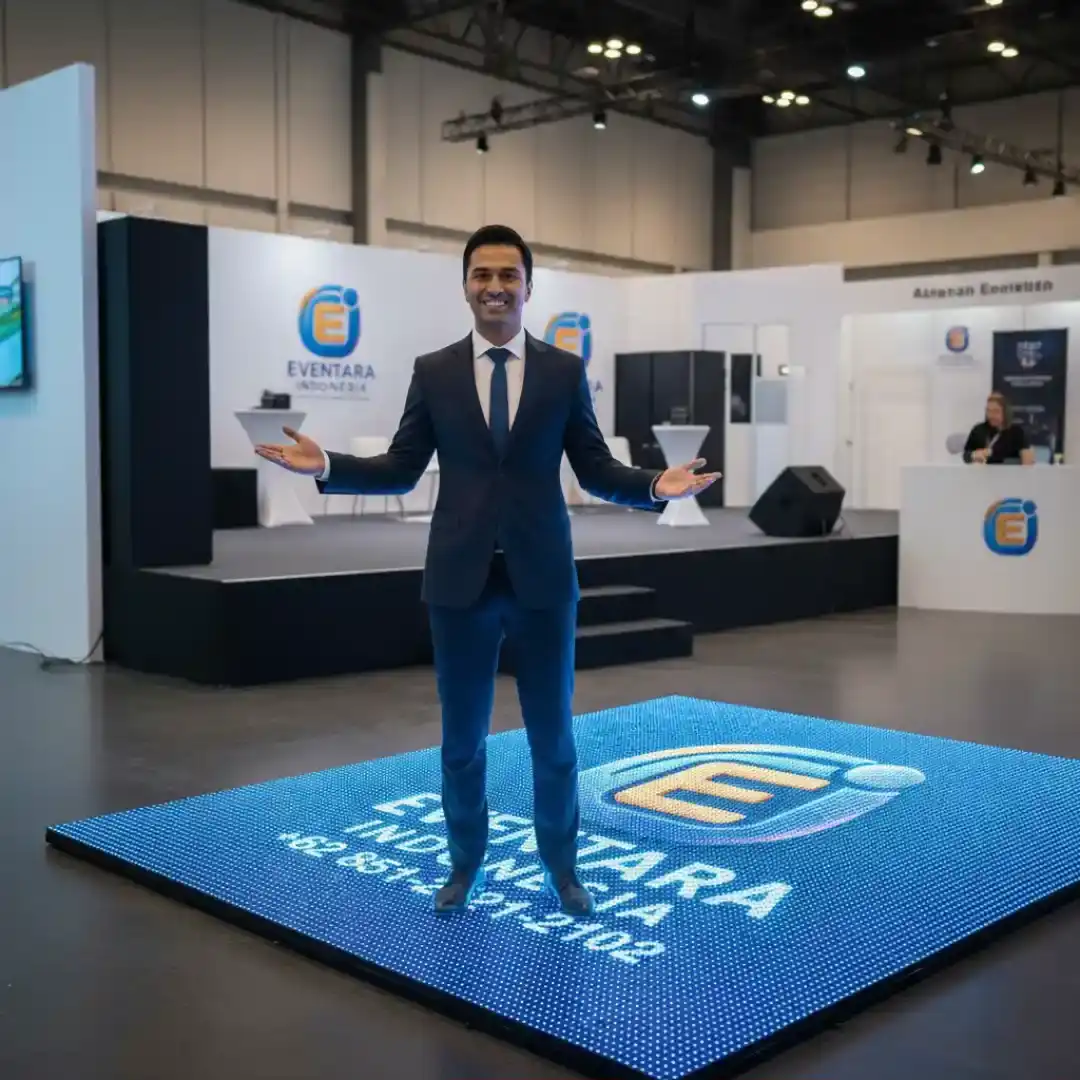
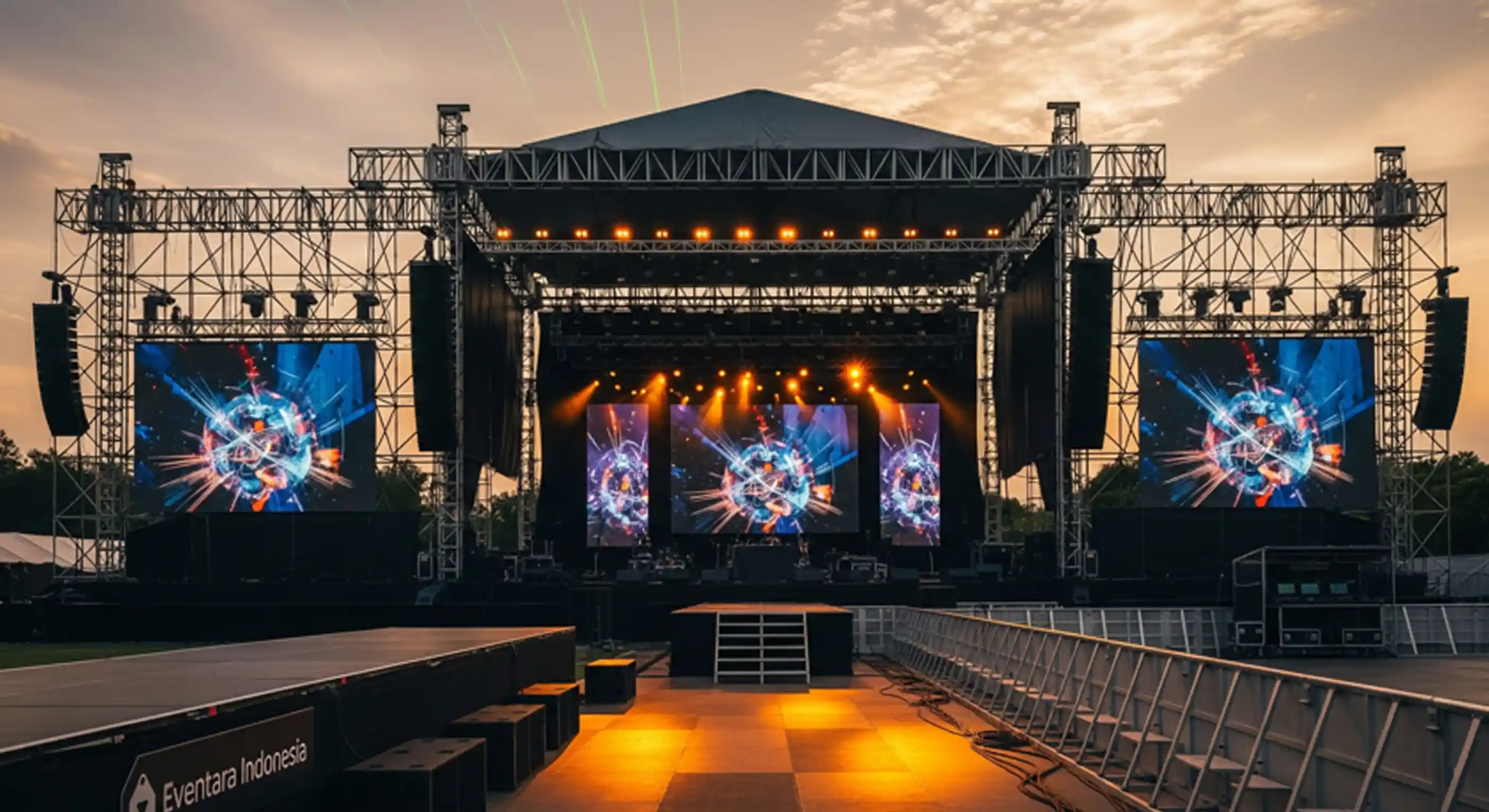
LED Screens Replace Printed Backdrops
A 6m × 3m LED screen deployed as a stage backdrop replaces hundreds of square metres of printed vinyl — which would otherwise end up in landfill. Eventara's LED screens support real-time content changes, adding flexibility.
Locally Sourced Sustainable Merchandise
Replace imported plastic merchandise with locally produced items: bamboo products, recycled cotton tote bags, locally grown gift hampers. Reduces both waste and transport emissions, and supports local Indonesian artisans.
No Single-Use Plastic Policy
Enforce no single-use plastic at your event — catering, registration, and delegate packs included. Indonesia's government-led plastic reduction programmes mean most Jakarta venues and caterers can support this if briefed in advance.
Reusable Staging & Booth Structures
Specify aluminium truss stages, system booths, and R8 partition walls — all available from Eventara — rather than one-use timber-and-MDF constructions. These structures are used at hundreds of events and then returned to inventory.
Post-Event Waste Reporting
Document all waste streams (recycled, composted, landfilled) and report the figures in your post-event sustainability summary. This forms part of Scope 3 reporting under GHG Protocol and satisfies most ESG audit requirements.
🏙️ City Silo: Sustainable MICE Production by Indonesian City
Indonesia's MICE landscape is diverse — each major city offers different sustainability infrastructure, venue options, and logistical contexts. Here's a practical overview for international planners:
Jakarta — Capital & Highest-Capacity MICE Hub
Jakarta offers the most developed sustainable event infrastructure in Indonesia. MRT Jakarta (launched 2019) connects South Jakarta convention corridors to the city centre, reducing delegate transport emissions significantly. Venues such as the Jakarta Convention Center (JCC), ICE BSD, and various hotel ballrooms have begun implementing green building practices. Eventara Indonesia's primary base is Jakarta, covering all Jabodetabek subregions (Bekasi, Tangerang, Depok, Bogor) with same-day equipment delivery.
Bandung — Creative Hub for Corporate Retreats
Bandung, 3 hours from Jakarta (or 45 min by Whoosh high-speed train), offers cooler temperatures and a strong creative economy. Natural venues — highland properties, eco-resorts, and tea-plantation settings — lend themselves to genuinely nature-immersive corporate retreats with minimal built infrastructure. Eventara services Bandung for equipment rental including silent gensets, LED lighting, and modular staging.
Bali — International MICE with Eco-Tourism Roots
Bali hosts some of Indonesia's most internationally recognised sustainable venues, particularly in Nusa Dua (BNDCC) and Ubud. The island's tourism economy has a well-developed local supplier network for catering, decoration, and transport. Carbon offsetting through Bali-based reforestation projects can be integrated directly into event budgets.
Surabaya, Yogyakarta & Beyond
Second-tier Indonesian cities are increasingly competitive for MICE events, particularly incentive travel. Sustainable production in these cities requires careful advance logistics planning — Eventara coordinates equipment mobilisation to all major Indonesian cities with a minimum 2-week lead time.
🎯 Sustainable Production by Event Type
| Event Type | Key Sustainability Levers | Eventara Equipment | Carbon Priority |
|---|---|---|---|
| Corporate Conference 50–500 pax |
LED AV, digital signage, paperless reg, transit-accessible venue | LED lighting, LED screen, silent genset, AC portable | ENERGY |
| Gala Dinner / Awards 100–1,000 pax |
Full LED stage lighting, LED backdrops, local catering, no single-use plastic | LED moving heads, LED par, videotron, modular stage | ENERGY + WASTE |
| Exhibition / Trade Show Custom footprint |
System booth (reusable), LED display, digital catalogue, sustainable merch | Booth pameran, R8 partisi, LED screen, lighting | MATERIALS |
| Product Launch 100–500 pax |
LED stage, no single-use brand materials, digital press kit | LED screen, stage & rigging, lighting, genset | ENERGY |
| Incentive / Team Retreat 20–200 pax |
Nature venue, low-footprint setup, local sourcing, carbon offset | Tenda roder, AC portable, silent genset | TRANSPORT + WASTE |
| Annual General Meeting 500–5,000 pax |
Transit-accessible venue, LED AV, live streaming to reduce travel | LED screen, sound system, live streaming, lighting | TRANSPORT |
🌳 Carbon Offsetting for Events in Indonesia
After reducing what you can, offsetting residual emissions is the final step toward carbon neutrality. Indonesia has a growing ecosystem of verified carbon offset platforms well-suited to MICE events:
- Jejakin: Indonesia-based climate tech platform used by corporates and government bodies (including Kemenparekraf). Tracks, analyses, and offsets event footprints with verified projects — including reforestation in Kalimantan and East Java.
- Jejak.travel: Tourism-focused offset platform integrated with Indonesian travel and event booking. Allows per-delegate carbon contributions at registration.
- Gold Standard / VCS-certified international offsets: International event organizers may prefer globally recognized offset certifications. These can be purchased and included in post-event ESG reports.
Don't just offset — communicate. Share your carbon footprint data, reduction efforts, and offset certificates with delegates via post-event email and your sustainability report. This transparency builds trust with stakeholders and strengthens your ESG narrative. Delegates increasingly notice — and appreciate — the effort.
🌿 Event Carbon & Energy Estimator
Get a quick estimate of your MICE event's energy consumption and genset requirement based on scale and equipment spec.
✅ Green Event Production Master Checklist
Use this checklist when briefing your event production vendor for any MICE event in Indonesia. Items marked MUST are non-negotiable for a credible sustainability claim. Items marked RECOMMENDED add measurable value to your ESG report.
| # | Checklist Item | Category | Priority |
|---|---|---|---|
| 1 | All lighting fixtures are LED-based (no halogen/HID) | Energy | MUST |
| 2 | LED screens used instead of printed backdrops & banners | Waste | MUST |
| 3 | Silent generator(s) right-sized to load with standby operator | Energy | MUST |
| 4 | Pre-event energy load plan provided by vendor | Energy | RECOMMENDED |
| 5 | Digital registration, agenda, and name badges (no print) | Waste | MUST |
| 6 | No single-use plastic in catering or delegate packs | Waste | MUST |
| 7 | Modular/reusable staging and booth structures only | Materials | RECOMMENDED |
| 8 | Locally sourced catering (within 150km of venue) | Transport/F&B | RECOMMENDED |
| 9 | Venue accessible by public transit (MRT/KRL/Transjakarta) | Transport | MUST |
| 10 | Carbon footprint calculated using a verified platform (e.g. Jejakin) | Reporting | RECOMMENDED |
| 11 | Residual emissions offset via Gold Standard / VCS certified credits | Offsetting | RECOMMENDED |
| 12 | Post-event sustainability report shared with delegates & sponsors | Reporting | RECOMMENDED |